The Unread Pile: A Love Letter to the Person You're Still Becoming
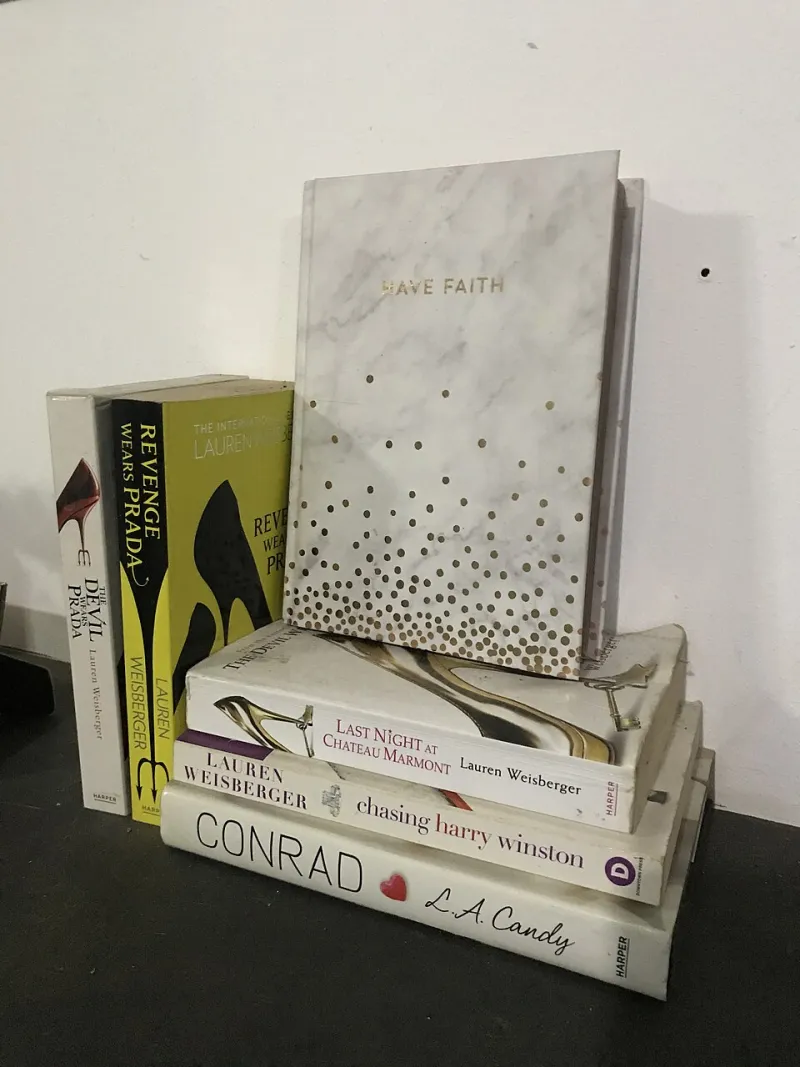
Photo: mycurrency.com, CC BY-SA 4.0, via Wikimedia Commons
There is a particular kind of book that lives beside a bed and never gets read. It has a bookmark in it, sure. Page thirty-one, maybe thirty-four. It has been there since roughly the spring, and every night you look at it the way you look at a gym membership you've decided not to think about until January.
Mine is a hardback about the history of the British coastline. Before that it was a Booker-shortlisted novel everyone assured me would "change how you see everything". Before that, a slim paperback on learning to draw, which I bought with real conviction on a rainy Tuesday in Waterstones and have since used, twice, to press a receipt flat.
We don't talk about these books much. We talk about our reading habits as if they're a moral failing — the annual Goodreads target missed by nine, the Kindle gathering dust in a drawer, the Audible subscription running quietly in the background like a boiler. But I've started to think the pile is getting a bad reputation it doesn't deserve.
The Japanese Had a Word for It
There's a lovely Japanese term, tsundoku, which describes the habit of acquiring books and letting them stack up unread. It isn't quite a scolding. Translated, it's closer to "reading pile" — an admission that the buying and the reading are two separate pleasures, and that both are allowed.
Which is freeing, if you let it be. Because the book you haven't read isn't a broken promise. It's an intention, sitting quietly on a shelf, waiting for a version of you who has twenty quiet minutes and a cup of tea and no phone buzzing on the duvet.
Think about what's actually in your stack. Go on — look at it properly. It's rarely random. There's usually a self-help hardback with a bright cover and a subtitle about habits, because you would like to be someone who flosses. There's a prize-winning novel, because you'd like to be someone who reads prize-winning novels. There's a guide to a hobby you haven't started — sourdough, perhaps, or watercolours, or keeping chickens, depending on your particular fantasy of rural contentment. And there's something slightly embarrassing and commercial that you bought at an airport and have no defence for.
Together, they form a kind of portrait. Not of who you are on a Wednesday evening in November, half-asleep and scrolling. But of who you're aiming at.
We Are Always Buying Our Future Selves
The marketing people have known this for years. Every bookshop is effectively a shop selling possible futures. Walk into any branch on a Saturday and you'll see people picking up titles not for the person they are but for the person they'd like to be by summer: calmer, fitter, better read, more Italian.
And is that such a bad thing? We could be spending that money on far worse fantasies. The unread pile is cheap optimism, when you think about it. It costs £9.99 and it says: I have plans. I'm not done.
I've started treating mine less like homework and more like a small, private library of ambition. Some nights I read twelve pages and feel briefly excellent. Other nights I read four and fall asleep with the book on my chest, which is arguably the most British form of reading there is. Either way, the pile doesn't judge. It just sits there, lamp-lit, patient.
The Guilt Is the Least Interesting Part
The guilt, though, is real. There's a particular sting in seeing a book you bought three years ago still pristine, its spine uncracked, its promise undimmed. Charity shops are full of them — the diet books, the business books, the novels bought for a holiday that rained every day. Oxfam has made a quiet industry out of our good intentions.
But I'd argue the guilt is the least useful thing you can bring to a bedside table. It makes you avoid the pile, which makes the pile grow, which makes the guilt worse. It's a small, domestic doom loop, and it's entirely self-inflicted.
The better move — and I say this as someone who has cleared out the pile at least four times with great moral seriousness — is to stop treating unread books as debts. You are allowed to let a book go. You are allowed to admit you'll never read the 800-page history of Byzantium, however much you enjoyed the idea of yourself reading it. Pass it on. Let it become someone else's future self.
Keep Three, Give Away the Rest
My current rule is simple and slightly ruthless. Three books on the bedside table, maximum. One that's genuinely for now — something you actually want to open tonight. One that's for the person you're trying to become, however slowly. And one that's pure comfort, the equivalent of a hot water bottle: a reread, a thriller, a cookbook you'll never cook from but enjoy flicking through.
Everything else goes on a shelf, or to a charity shop, or to a friend who'll actually read it. The bedside table is prime real estate. It should hold what you're reaching for, not what you're avoiding.
But keep at least one hopeful book on there. Keep the one that says, quietly, this is who I'm still becoming. Because there's something lovely about going to sleep next to your own ambitions, even small ones, even slightly dented ones. Tomorrow you might read a chapter. Or you might not. Either way, the book will be there, and so, remarkably, will you.
And if all else fails, the stack makes a decent bedside lamp riser. Very practical, books. Even the ones you haven't opened.