Before You Turn the Handle: The Case for Ten Minutes in the Car
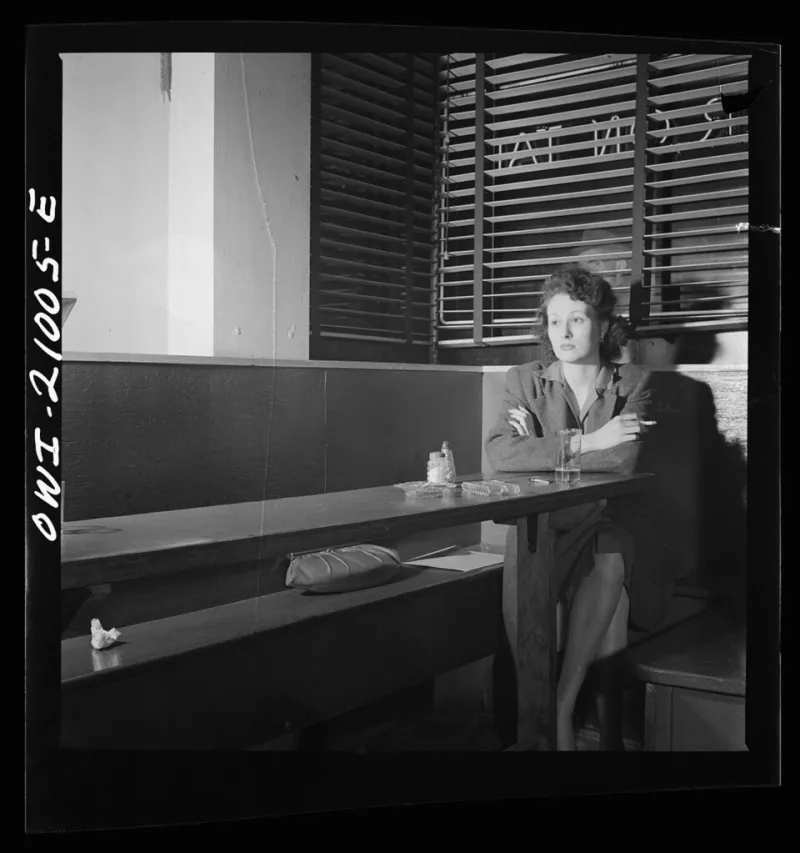
Photo: Esther Bubley, Public domain, via Wikimedia Commons
I have a confession to make. Last Tuesday I arrived at the supermarket twelve minutes early. Not because I was desperate for milk, and not because I had anywhere better to be. I simply sat in the car park with the engine off, the radio still murmuring, and watched a man load bags into a hatchback two rows over. It was, genuinely, one of the nicest parts of my day.
This is not a productivity hack. I did not use those twelve minutes to meditate, meal-plan or listen to a business podcast at 1.5 speed. I did nothing. I let a half-finished segment on local radio play out, watched a seagull inspect a trolley, and felt my shoulders come down from somewhere near my ears. Then I went in and bought the milk.
The airlock between versions of you
There is a name for that little pocket of time, though we rarely say it out loud. It is the buffer zone. The car park pause. The ten minutes you build into your journey not because you need them for traffic, but because you need them for yourself.
Think about what happens when you arrive somewhere. You are one person in the car — slightly rumpled, possibly singing, certainly unobserved — and then you open the door and become the person who is expected. The friend who is fine. The patient who is calm. The parent who has remembered the PE kit. The colleague who has opinions about the new coffee machine.
That switch does not happen instantly, whatever we tell ourselves. The car gives us somewhere to do it. It is a small, private room parked in a public place. The seat knows the shape of you. The radio is company that asks nothing in return. For ten minutes, you are between things, and that is a surprisingly rare place to be.
A nation of early arrivals
Britons have a complicated relationship with time. We are a country that treats arriving ten minutes early as basic manners and arriving exactly on time as a mild personal failing. Somewhere along the way, we built in the buffer. Then we discovered that the buffer has a car park attached.
You see it everywhere once you start looking. The leisure centre car park at 6.55pm, full of people staring at the windscreen before aqua aerobics. The village hall on a Thursday, where the first three cars arrive twenty minutes before the book club and nobody gets out. The pub car park before a birthday drink, where someone is having a quiet word with themselves before going in to be delighted.
It happens outside appointments too. The GP surgery, the dentist, the soft play centre on a rainy Saturday. Even the gym, where sitting in your car for a few minutes is often the only part of the trip that feels restful. We call it being organised. Sometimes it is. But often it is something gentler than that: a small act of self-preservation before the world asks for our attention.
The half-finished radio segment
There is a particular comfort in the radio you never quite finish. You pull into the car park midway through a story, or a phone-in, or a piece of music you haven't heard since a car journey in your twenties. You could turn it off. You could get out. But you don't, because the unfinished sentence has become a tiny reason to stay put.
Radio is good at this. It does not demand eye contact. It does not need you to reply. It fills the car with a low-level hum of other people's lives, which is oddly soothing when you are about to walk into a room full of actual people. A podcast works too, though it can feel more deliberate, more like homework. The radio is ambient. It is the sound of the day continuing without you for a moment.
And if you switch it off and sit in silence? That is allowed as well. You do not have to optimise the pause. You do not have to breathe in for four and out for six, or list three things you are grateful for, or check your emails one last time. You can just sit. The car will not judge you. The seagull certainly won't.
Why the supermarket counts
The car park pause is not only for social events. Some of the most necessary buffers happen before the weekly shop, after a long day, when the drive home has not quite finished the job of separating work from home. You park, you switch off, and you give yourself a moment to remember that you are a person with a list, not a machine with a deadline.
It is the same before a difficult phone call, or a family visit, or a trip to the tip with a boot full of broken things. The car holds you for a minute. It is a waiting room without fluorescent lights. A dressing room for ordinary life. You gather yourself, and then you go and do the thing.
When the pause becomes a hiding place
I should be honest, though. There is a line between a helpful buffer and a quiet form of avoidance. Ten minutes with the radio on is one thing. Forty-five minutes in a leisure centre car park, pretending to look for a parking ticket you already have, is another. If the thought of going in makes your chest tight every time, the answer is probably not more time in the car. But for most of us, most of the time, the pause is not avoidance. It is preparation.
So here is a small suggestion for the next time you arrive early. Do not rush to fill the gap. Do not immediately reach for your phone, or start mentally rehearsing the conversation, or decide that because you have ten minutes you should use them to answer an email. Let the handbrake off. Let the radio finish its sentence. Take one decent breath, pocket your phone, and then open the door.
The world will still be there. It can wait ten minutes. You have been driving; now let yourself arrive.