The Five-Minute Excuse: Why Popping Out for Milk Is Really About Belonging
There is a particular kind of November evening when the flat feels smaller than usual and the fridge feels louder than it should. You are halfway through making tea, or maybe halfway through a boxset, when you realise the milk situation is critical. Not a weekly shop. Not a list. Just one pint. Maybe a loaf. Possibly an onion, if you are being optimistic about dinner.
So you put on shoes, grab a coat, and say the line that has echoed through British hallways for generations: just popping out. It sounds like nothing. It is, in fact, one of the most quietly useful things we do all week.
The errand that isn't really an errand
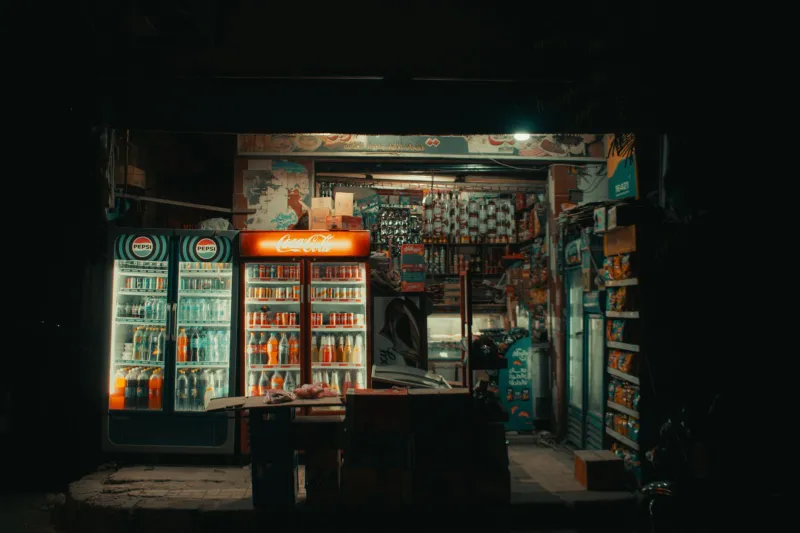
On paper, the corner shop run is a transaction. You need something small; the shop has it; you pay and leave. Convenience, done. But anyone who has ever become a regular at a local shop knows there is more going on. The five-minute trip is a tiny social ritual, a way of reminding yourself and the street that you are here.
You see the same faces. The person from the flat upstairs buying batteries. The dad from the school run choosing a paper. The teenager who works Saturdays and always seems mildly surprised to be there. The shopkeeper gives you a nod that is not quite familiarity and not quite indifference. It is the middle ground where neighbourhoods actually live.
This is not a romantic fantasy about every corner shop being a warm little lighthouse. Some are tired. Some are expensive. Some have closed, and the gap they leave is more noticeable than anyone expected. But where they work, they work as social infrastructure. Not because they are trying to, but because they are open, local, and small enough for people to run into each other.
A five-minute lesson in friction
Modern life is excellent at removing friction. You can order groceries from your phone and have them arrive in an hour. You can scan your own shopping and avoid eye contact entirely. You can get almost anything delivered without leaving the sofa. There is nothing wrong with that. Efficiency has its place, especially on a wet Tuesday when the idea of putting on real trousers feels ambitious.
But frictionless can be lonely. The corner shop reintroduces a gentle sort of friction: a queue, a card machine that needs a second attempt, a decision between two types of onion, a hello you did not plan for. It is not inconvenience for its own sake. It is a small pause where strangers become familiar and familiar faces become part of your week.
You overhear things in a corner shop. Local things. A burst pipe on the next road. A lost cat. A school fair that needs volunteers. None of it is breaking news, but it is the texture of a place. You cannot get that from a delivery slot. You can only get it by standing in a queue behind someone who is telling the shopkeeper about their knee.
The shopkeeper as neighbourhood archivist
There is a particular skill to running a corner shop. It is part retail, part memory. The good ones remember that you buy the same paper on Sundays, that your child likes the blue ice lollies, that you once needed batteries for a toy at 7pm on a Friday. They do not make a performance of it. They just hand you the thing you forgot you always buy.
That kind of recognition is underrated. In a city, being recognised can feel like a luxury. The corner shop offers a low-stakes version of it. You can be a regular without being known too deeply. The transaction is small enough that no one expects a life story. That is the relief of it. You are not there to explain yourself. You are there for milk and a nod.
Why the ritual matters now
We spend a lot of time trying to optimise our lives. We batch tasks, streamline routines, and treat errands as things to be eliminated. But the corner shop run is a useful counterweight. It is not a wellness trend. No app tracks it. It does not require a subscription or a special outfit. It is just a small act of local participation.
On a dark afternoon, it gets you out of the door. It gives you weather, street, and other people. It marks the rhythm of a day in a way that another hour of scrolling does not. And it is practical. The forgotten onion, the emergency chocolate, the birthday card you nearly left until tomorrow. The corner shop is a cupboard for the neighbourhood.
How to do it well
You do not need to turn it into a project. That would ruin it. But there are small ways to let the ritual do its work. Walk if you can. Leave one ear free. Say thank you to the person behind the till. Buy the thing you came for and maybe one small thing you did not. Notice the shop's own rhythms: morning papers, after-school sweets, evening wine, the Saturday lottery queue.
If you are new to an area, go twice. Regularity is the whole trick. The first visit makes you a customer. The second makes you a recognisable face. By the third, you are part of the scenery, which is a warmer thing to be than it sounds. And if your local shop is still open, use it. A corner shop cannot survive on nostalgia alone.
The smallest errands are often the ones that hold a place together. Not grand gestures, not community campaigns, just the repeated act of stepping out and coming back. The milk run. The paper. The nod. The five minutes. It will not solve loneliness or save every high street. But it keeps a thread alive. Tonight, you might only need milk. You will probably come back with a bit of the neighbourhood too.