Ping of the Neighbourhood: What Your Street WhatsApp Group Really Says About Britain
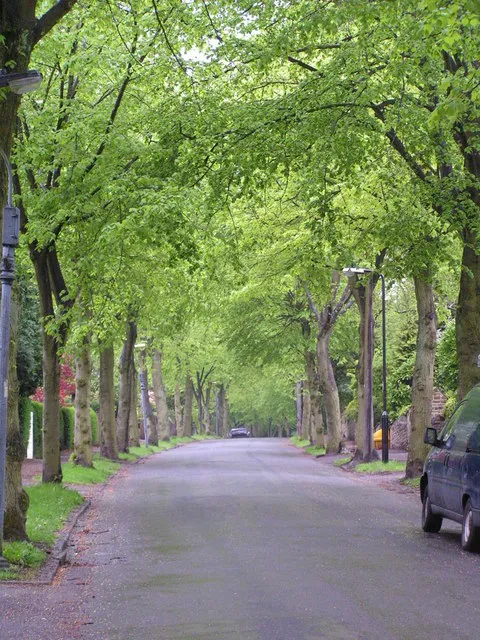
Photo: Nigel Chadwick, CC BY-SA 2.0, via Wikimedia Commons
At 7.14am on a Tuesday, someone on a street in south London asks the group if anyone has a spare egg. By 7.32am, three neighbours have offered eggs, one has offered a whole box of eggs and a lecture on why you should never buy the cheap ones, and a fourth has asked whether anyone else's wheelie bin was missed. This is the street WhatsApp group: part parish council, part lost property office, part emergency service for minor domestic crises.
The group chat as a miniature parish council
These groups have names like 'Elmfield Road Neighbours', 'The Crescent (No Politics Please)' and 'Bin Watch'. They exist on WhatsApp and Signal, occasionally on Telegram, and they do the work that used to be done by a noticeboard in a post office window. They organise spare tomatoes, recommend plumbers, report fly-tipping, coordinate a street party, and argue, with real feeling, about whether it is acceptable to put a recycling box out on a bank holiday.
One group in Bristol spent 47 messages debating the correct way to stack a communal bin. Another in Sheffield has a standing 'free stuff' thread so active that a cafetière and a child's scooter changed hands within nine minutes. A woman in Cardiff once posted a photograph of a cat and the message 'Is this anyone's? He is judging me.' The cat was returned; the photograph became the group's icon.
The kindness behind the pings
For all the admin, the group is often a quiet solution to a very modern problem. More of us live alone. More of us work from home. More of us have neighbours we recognise but do not know. The street group offers a low-stakes way in. You do not have to knock on a door or invite someone for dinner. You can offer half a bag of compost. You can ask if anyone has a ladder. You can say, at 2am, that you can hear a strange noise and someone will reply, 'That's the fox, love, it does it every night.'
For older residents, the group can be a lifeline. For new parents, it is a place to ask the questions you feel silly asking. For people who have just moved to a city, it is proof that the street is not just a row of doors. One woman I spoke to, who moved to Manchester last year, said the group was the first place she felt known. 'I'd not met anyone,' she said. 'But when my boiler broke, three people offered me a shower. That's not nothing.'
When the street curdles
Of course, it is not all eggs and good will. The street group can curdle. There is the person who replies-all with a spreadsheet. There is the passive-aggressive note about parking. There is the debate about firework night that goes on for so long that people start muting the group for their own sanity. There is the neighbour who posts a Ring doorbell video of a courier and asks, darkly, 'Does anyone know this man?' — as if the street has its own CCTV.
The etiquette is not complicated, but it is not always followed. Keep it local. Keep it useful. Do not use the group as a personal megaphone. If you have a problem with a specific neighbour, the group is not the place to solve it. And if you are going to send a voice note, at least warn people.
The new village hall?
The phrase 'village hall' gets used a lot about these groups, and it is not quite right. A village hall was a building you had to go to. It had a rota, a smell of floor polish, and a noticeboard that nobody read. The street group is in your pocket. It is more convenient and less demanding. But it does something similar: it turns a collection of houses into a place where small obligations run back and forth.
In 2026, that might be the most hopeful thing about the ping. It is annoying, yes. It is another inbox. But it is also a hand on the shoulder. It says: someone on your street knows you exist. They might even have a spare egg.
So the next time your phone lights up with a message from 'Elmfield Road Neighbours', do not roll your eyes. Read it. You might not need a tomato. But you might need to know that someone three doors down is thinking about the bins, the cat, the fox, the street. That is not nothing. That is a village, trying to happen.