Take a Seat: The Quiet, Radical Pleasure of Ten Minutes on a Park Bench
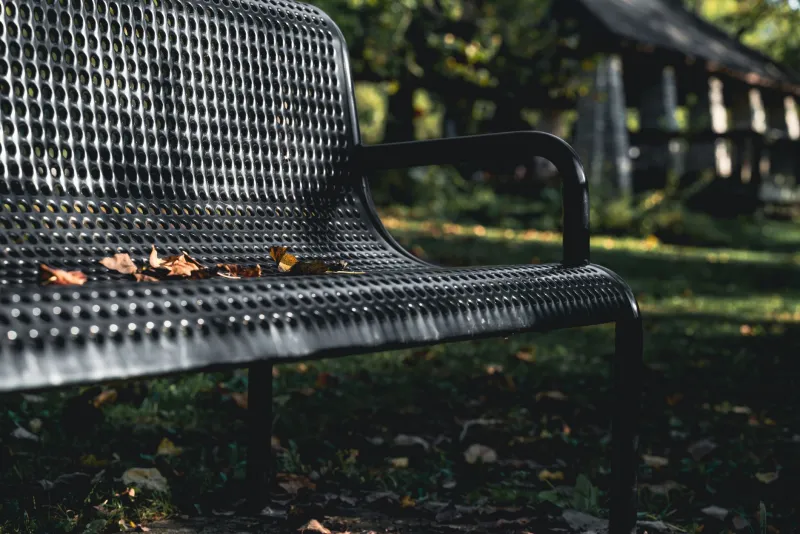
There's a bench at the top of my local rec, angled slightly towards the swings, with a plaque bolted to the backrest: In memory of Alan, who loved this view and a good sit down. Nobody I've ever met knows who Alan was. But most afternoons, someone takes his seat and does exactly what he did. Sits. Looks. Stops.
I started noticing benches about a year ago, in the way you notice things once you've started needing them. Now I see them everywhere: the scorched wooden one outside the Co-op, occupied permanently by a man with a paper and no particular plans; the pair facing the canal, deliberately spaced two metres apart; the lonely single on the pedestrianised high street, half in the shade of a phone shop awning. All of them free. All of them unbookable. All of them quietly doing more for the national mood than most of the things we pay for.
The last place with no entry fee and no expectations
Think about what you actually have to do to enter a cafe in 2026. You have to buy something. Possibly three somethings, if you're staying longer than twenty minutes and the table's small. You have to be reachable, because your phone is out. You have to look like a person doing a task.
A bench asks none of this. It doesn't want your card details or your opinion or your best posture. There's no ambient playlist engineered to make you leave. You can arrive with nothing, sit for a quarter of an hour, and leave still owing nothing, which in this economy is close to a miracle.
That's the bit people miss. The bench isn't just a seat. It's one of the last pieces of civic furniture that doesn't require you to spend money in order to occupy it. Libraries have been quietly winnowed. Public toilets are an endangered species. The bench, somehow, has survived — often creaking, often varnished by a volunteer, but still there.
Bench etiquette, as practised by nobody in particular
There's an unwritten code, and you already know it. You just haven't said it out loud.
The nod. If someone approaches a bench with free space at the opposite end, you both perform a brief, almost imperceptible nod. It says: I acknowledge you, I have no intention of talking to you, and we are both fine with this.
The middle distance. Eye contact lasts no longer than a second before both parties relocate their gaze to a tree, a bus, a pigeon. The middle distance is the bench's native language.
The two-person bench. If a bench only fits two, and one person is already on it, nobody sits. It's the most strictly observed rule in Britain and it's never been written down.
The sandwich. A bench is where a supermarket meal deal goes to become a moment of peace. Twenty minutes in the middle of a working day where nobody can ask you anything and the screen can stay in your pocket. If you've eaten a lunch like that recently, you'll know it taste better than it had any right to.
What a bench tells you about a town
Some urbanists argue you can read a place by its benches, and honestly, they might be onto something. A town with well-tended benches — brass plaques, no litter, a bin within reach — is usually a town that still believes in the idea of people lingering. A town where every horizontal surface has been fitted with railings or split into three short bumps? That's a town that has decided some people shouldn't stop moving.
That's not paranoia. It's called defensive design, and it exists. Armrests in the middle of benches aren't there because someone was thinking about your back. They're there so nobody lies down.
So when you find a good bench — a wide one, facing something worth facing, with a plaque to somebody's grandmother — you've found something slightly rarer than you'd assume. Someone, once, argued for it in a meeting. Someone found the budget. Someone still deep-cleans it. Sitting on it is, in a small way, a vote for all of that continuing.
Ten minutes really does shift the day
I'm not going to pretend a bench is a wellness programme. But there is something in the simple act of sitting still, outdoors, without an objective, that a busy brain seems to need.
You notice things you'd otherwise walk past. The way light falls across a playing field. Two dogs negotiating custody of a tennis ball. A teenager practising kickflips badly and with total commitment. The ordinary, unphotogenic business of a place carrying on. After a week of screens, that's not nothing — it's a kind of refresh that doesn't come with a subscription.
And crucially, you're doing it in public. You're visible, present, and contributing absolutely nothing to the economy. There's a quiet radicalism in that. Most of the ways we occupy shared space now are transactional: you're walking to a shop, queuing for a coffee, commuting through. Just being somewhere, sitting down, taking up a metre of the world for no reason at all, is oddly radical. Slightly defiant, even. A small refusal to be productive.
Take the seat
Here's my suggestion, and it's a modest one. On the next dry afternoon, find a bench. Not one outside a pub garden with a menu, and not one in a service station. A proper one, in a park or at the edge of a precinct.
Sit down. Leave the phone where it is. Give it ten minutes — enough time to get past the fidget, which usually lasts about four. Let your shoulders drop. Look at whatever's in front of you, properly.
Alan would approve.