Same Boots, Same Jumper, Same Me: The Quiet Relief of Getting Dressed on Autopilot
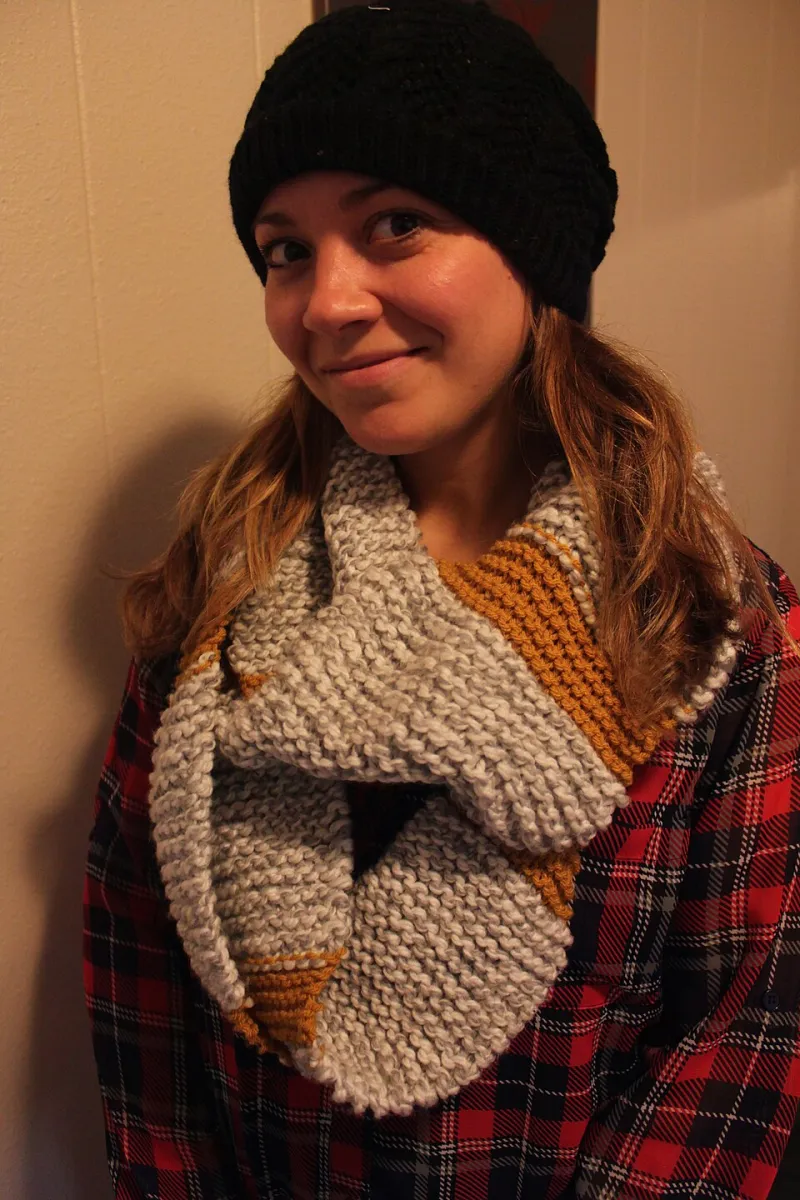
Photo: Eli Duke, CC BY-SA 2.0, via Wikimedia Commons
On the first properly cold morning of November, I stood in front of my wardrobe and felt the familiar flicker of low-grade panic. Not because I had nothing to wear — I had plenty — but because I had to choose. A meeting before lunch, a school run, a Tesco trip, a friend’s birthday drink I’d already half-talked myself out of. Each version of the day seemed to demand a different version of me, and the wardrobe was asking me to decide before I’d even had a cup of tea. Then I reached for the same thing I always reach for: dark jeans, a grey jumper, the boots I’ve had resoled twice. And the panic went quiet.
This is not a fashion essay. I am not here to tell you to buy five identical outfits and call it a personality. But over the last year or so, I’ve accidentally built a daily uniform, and it has become one of the small, unglamorous hinges on which my week turns. It is less about style and more about space — the space between waking up and getting on with it.
The 7:12am Problem
We talk about decision fatigue as though it belongs to Silicon Valley founders and people with too many streaming subscriptions. But it’s just as present in a British hallway at 7:12am, with one sock on, a phone buzzing, and a radiator that needs bleeding. The average morning asks us to make dozens of tiny calls before we’ve left the house: what to eat, what to pack, what to answer, what to ignore. Adding “what shall I wear?” to that pile is like asking someone to solve a riddle while holding a slice of toast.
My old wardrobe was a museum of maybes. Clothes for a version of my life I kept meaning to live: the going-out top, the tailored trousers for a promotion I didn’t actually want, the dress that only worked at weddings in June. Every morning I’d shuffle through them like a deck of cards, looking for a version of myself that felt convincing. Some days I found one. Most days I wore the same jeans anyway, just later and with more guilt.
What I Actually Wear Now
The uniform is not strict. That’s the point. It is two pairs of jeans that fit properly, four jumpers in colours that make me look slightly less like I’ve been up since 5am, and one pair of sturdy boots that have seen off three winters and a very muddy festival. In summer, the jumper becomes a plain T-shirt and the boots become trainers. In really grim weather, there’s a coat that makes me look like a bin bag with ambitions. But the principle is the same: I know what I’m going to wear before I open the wardrobe.
I came to it by accident. A clear-out one rainy Saturday, three bags to the charity shop, and a rule I made mostly as a joke: if I hadn’t worn it in a year and it needed special underwear, it could go. What stayed was quietly revealing. Almost everything I actually wore was soft, dark, practical, and slightly boring. It was also, I realised, the closest thing I had to a uniform. So I leaned in. I bought another jumper in the same style. I stopped pretending I was a person who ironed.
The Strange Comfort of a Known Quantity
There is an emotional comfort in a known quantity that I didn’t expect. The jumper is the one that smells faintly of the drawer it lives in. The jeans have softened in exactly the right places. The boots are so worn in that they feel like a handshake from an old friend. Putting them on is not a decision; it’s a small homecoming. On days when my head is full — work, family, the state of the world, whether I remembered to defrost the chicken — that is a genuinely lovely thing to have.
It also helps that it looks like I’ve made an effort, even when I haven’t. A grey jumper and dark jeans will get you into most British situations without comment. It’s the dress code of the pub, the office, the train, the supermarket at 9pm. It says: I am here, I am comfortable, I am not asking for a conversation about my outfit. In a country where we often communicate through understatement, that feels about right.
Decision Fatigue, But Make It British
We are a nation that understands a practical layer. We own cagoules. We know the difference between “going out out” and “popping to the shop”. We have strong opinions about the right number of coats. So the daily uniform isn’t really a radical concept; it’s just a tidy version of something we already do. Most of us have a favourite outfit we reach for when we need to feel like ourselves. The uniform simply admits it out loud.
I’m not suggesting everyone should dress like me. Some people get real joy from getting dressed — the colour, the shape, the ritual. Good. Keep it. This is not a campaign against personal style. It’s a note to anyone who feels a small, daily drain from the wardrobe question, and who might find relief in making the answer the same more often. You are allowed to wear the thing that works.
The Bit Where I Admit It’s Not Really About Clothes
The uniform is a small kindness, but it’s also a boundary. It says: my energy is finite, and I’d like to spend it on something other than deciding whether this shirt goes with these trousers. It says: I don’t have to be a different person for every hour of the day. It says: the version of me that turns up in the same jumper is still a version worth turning up as.
Self-care is often sold as something you add — a face mask, a journal, a 6am run. Sometimes it’s what you take away. A decision. A should. A pile of clothes that never quite fits the life you’re actually living. I still have a few things for the days when I want to be seen. A scarf, a decent pair of earrings, a coat that doesn’t look like a bin bag. But the base layer is the same. And most mornings, that is enough.