The Cupboard of Good Intentions: What All Those Tote Bags Are Really Saying
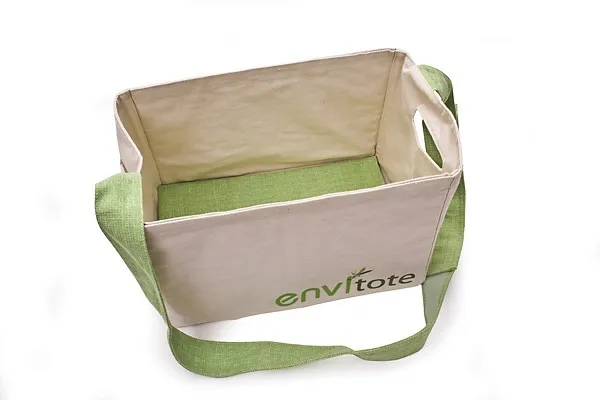
Photo: No machine-readable author provided. Tanacollins assumed (based on copyright claims)., Public domain, via Wikimedia Commons
There is a particular kind of archaeology that happens in a British hallway. You open the cupboard under the stairs, move a box of Christmas lights, a half-used bottle of screen wash and a bag containing bags, and you find it: the bag-for-life graveyard. Not one bag. Not five. A soft, crackling mound of them, folded into each other like a argument no one can be bothered to finish.
We all have one. Maybe yours is in the kitchen drawer, spilling out beside the takeaway menus. Maybe it is in the boot of the car, next to a reusable coffee cup you have never once remembered to take into a café. Maybe it is hanging from a hook by the door, pretending to be useful, while you walk past it with your arms full of shopping and a vague sense of shame.
The museum under the stairs
What is strange is that we keep buying them. The supermarket charges a small amount, we forgot ours, we pay it, and we come home with another sturdy bag that promises to save the planet and instead joins the pile. It is one of the quietest ways modern British life shows us who we mean to be — and who we actually are on a wet Tuesday when we have run out of milk.
I say this with affection, because I am the worst offender. I have a bag that folds into a tiny pouch, which I bought specifically because it folds into a tiny pouch. I have never folded it into the pouch. I have a bag from a bookshop I love, a bag from a festival I did not enjoy, and a bag from a garden centre that has somehow become the bag I use to carry other bags. It is bags all the way down.
A small charge, a large collection
The bag charge was meant to change our behaviour, and in many ways it did. We no longer take a thin plastic bag without thinking. We have become people who say, earnestly, that we have one in the car. But we have also become collectors. The reusable bag is a small, affordable symbol of virtue. It says: I am trying. It says: I care about the sea. It says: I will remember next time.
Except next time arrives, and we are standing at the till with a basket of leeks and a look of mild panic. So we buy another. It is not really about the bag. It is about the gap between the person we plan to be and the person who leaves the house with only a phone and a vague sense of optimism.
The gap between the plan and the pavement
I think this is why the bag cupboard feels so relatable. It is not a moral failing. It is a small, ordinary collision between intention and reality. We mean to be organised. We mean to keep a bag by the door. We mean to be the sort of person who has a spare tote in their handbag and a folded number in their coat pocket. And then life happens, and we are carrying a watermelon in our arms like a newborn.
The bag graveyard is also oddly comforting. It is proof that we keep trying. Every bag is a tiny vote for a better habit. The fact that the habit has not quite stuck does not erase the trying. It just means we are human, and humans are very good at buying things that promise to solve a problem we have not yet solved.
What we are actually collecting
There is a bigger conversation here about sustainability guilt, and how easily it can curdle into something performative. We are told to make better choices, and we do — sort of. We buy the reusable bag, the bamboo cutlery set, the keep cup. But the system around us is still built for convenience, and our lives are still busy. The reusable bag is not a failure of willpower. It is a small, imperfect attempt to live with care in a world that makes care slightly inconvenient.
That is why I have stopped feeling bad about my bag cupboard. Instead, I have started treating it like a small museum of good intentions. There is the bag from the first proper food shop I did in my first flat. There is the one from a weekend away where it rained the entire time. There is the one I bought because it had a nice pattern on it, and which I have never used because it is too nice to use. Apparently, I own a bag for best.
A kinder way to count
So here is a gentle suggestion, as we head towards the end of 2026 and the inevitable round of small resolutions. Do not count your bags. Do not add them up and feel a wave of eco-shame. Instead, take one bag — just one — and put it somewhere you will actually see it. By the door. In the car. In your work bag. Then let the rest be. They are not a crime scene. They are a cupboard.
And if you do forget it again, and come home with another bag, try not to be too hard on yourself. You are not a bad person. You are a person in a hurry, in Britain, in November, with a lot on your mind and a very full cupboard under the stairs. The bag-for-life graveyard is not where good intentions go to die. It is where they wait, patiently, for the next trip.