The Joy of Walking Nowhere With Nothing in Your Ears
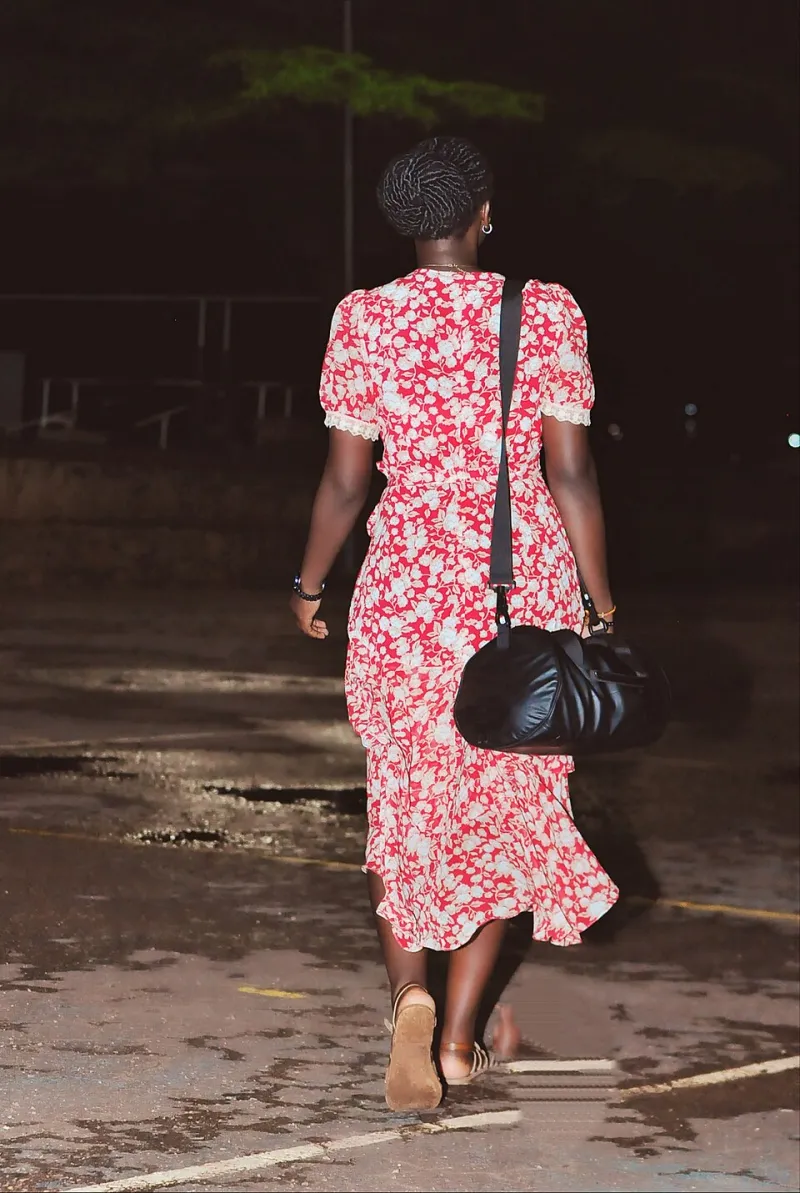
Photo: Jackshots256, CC BY-SA 4.0, via Wikimedia Commons
On a damp Tuesday in Leeds, Priya did something that felt faintly illicit. She put on her coat, left her headphones on the hall table and walked to the end of her street without a plan. No podcast. No album. No steps target. She turned left because the blossom looked good, then right because she could smell bread. Twenty minutes later she was standing outside a hardware shop she had passed a hundred times and never once seen.
‘It was weirdly emotional,’ she tells me. ‘Not in a dramatic way. I just realised I had been editing out my own neighbourhood.’
Priya is not alone. Across the UK, a small but noticeable habit is taking root: the nothing walk. A stroll with no destination, no audio accompaniment and no self-improvement agenda. Just you, the street, the weather and whatever turns up in your head. It is not quite a trend with a hashtag, more a quiet defection from the soundtracked life.
The walk that goes nowhere
In Bristol, a reader called Tom has started doing a loop of his local park after dropping his daughter at nursery. He used to listen to a business podcast. Now he listens to the bin lorry, the pigeons and the slightly awkward silence between dog walkers. ‘The first few minutes are boring,’ he admits. ‘Then they are not.’
In Glasgow, Marek walks to the shop without his phone in his hand. In Norwich, Ellen takes a fifteen-minute wander before her shift, specifically to look at other people’s front gardens. In London, Aisha leaves one earbud out on her commute walk — a gateway drug, she calls it — and has begun to notice the same man watering his window boxes every morning.
These are not epic hikes. They are the sort of walks we already do, minus the input. And that, according to the people doing them, is the point.
What silence is actually for
The obvious explanation is burnout. We spend our days swimming in notifications, group chats, rolling news and the low hum of things we have not done yet. Putting in headphones can feel like care. It can also be one more layer of input on top of an already crowded day.
Gemma, a counsellor in Sheffield, says the nothing walk works because it gives the brain a break from what she calls ‘continuous processing’. ‘When you are listening to something, even something lovely, part of you is still tracking it,’ she says. ‘You are following an argument, a story, a beat. Walking without that gives your attention a different job: notice the environment, notice your own pace, notice what you are feeling. It sounds small. It is not.’
There is also the boredom question. Many of us treat boredom as a fault to be fixed, preferably within four seconds. But boredom is often just the gap before a thought arrives. Some of the best ideas, the oddest memories and the most useful worries turn up in that gap. If we fill every spare moment with a voice in our ears, we never get to find out what we might have thought.
A small rebellion against the soundtracked life
Part of the appeal is that the nothing walk is almost aggressively unoptimised. You cannot measure it properly. There is no badge for noticing a nice door. You cannot post a satisfying graph of how present you were. It is the opposite of a productivity hack, which is probably why it feels so good.
It also makes ordinary places feel less ordinary. The high street becomes a place where things happen rather than a corridor between tasks. You notice the season changing. You see the same faces. You develop the low-level, unglamorous familiarity that makes a neighbourhood feel like somewhere you live rather than somewhere you pass through.
And yes, there is something mildly British about it. We are a nation of people who will happily walk for an hour if there is a reason, but feel suspicious of walking for no reason at all. The nothing walk gives us permission to be a bit aimless without having to call it a hobby.
How to start, without turning it into a project
If silence sounds suspicious, start small. Leave your headphones at home for the walk to the shop. Take one earbud out on the way to the bus stop. Do a ten-minute loop of your block after dinner and let it be a bit dull. Dull is allowed.
Try not to make it a performance. You do not need special shoes, a meditation app or a journal. You do not need to tell anyone you are doing it. You certainly do not need to walk for an hour. The aim is not to achieve a walk. The aim is to be out in the world with nothing to consume for a few minutes.
If you get bored, stay with it for one more street. If you get anxious, look at three things: a colour, a texture, a sound. If you get restless, turn for home. The walk does not have to be good. It just has to be yours.
Priya now does her nothing walk most weeks. She has not become a different person. She has not started a gratitude journal. She has, however, found a shortcut to the bakery, learned the name of the man who runs the hardware shop and discovered that her street sounds different when it is about to rain.
‘It is not really about the walking,’ she says. ‘It is about the bit before the walking. The bit where you decide not to fill the space.’
In 2026, that might be the most useful thing any of us can practise: leaving a little room. No headphones required.